
July 30, 2026
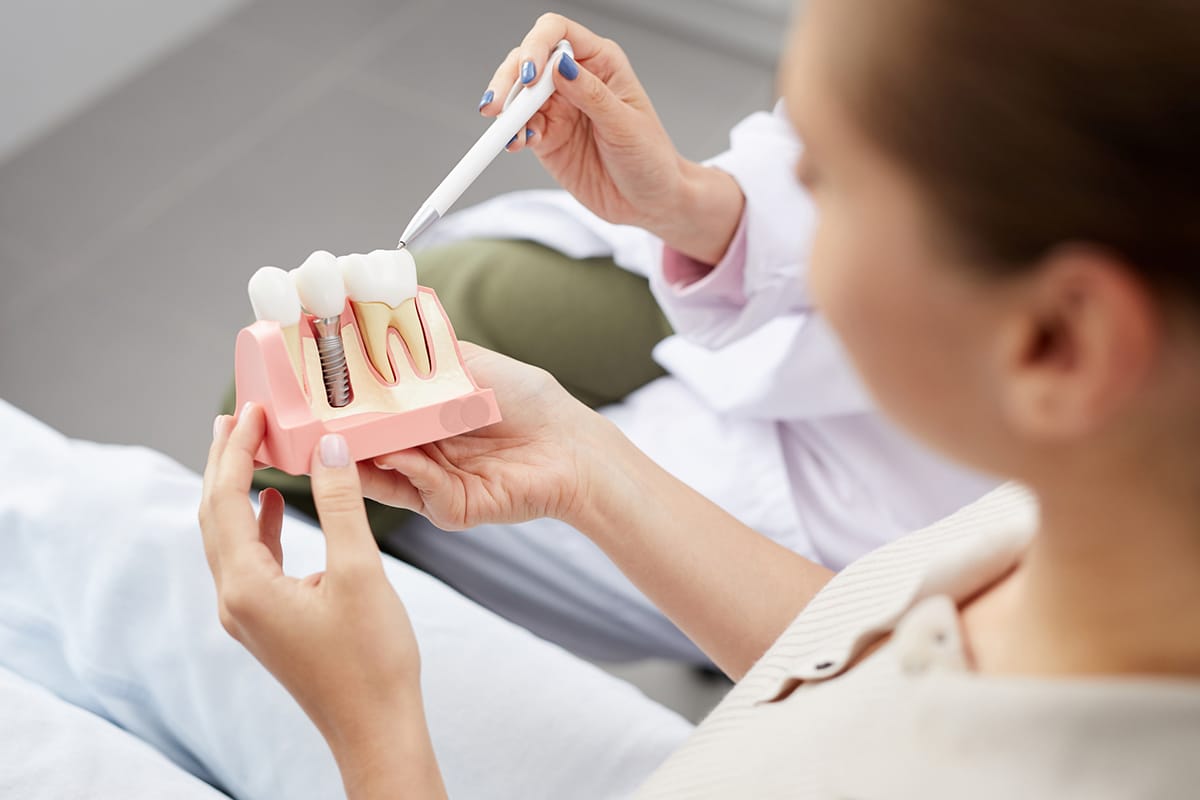
Missing teeth affect more than your appearance — they change what you eat, how clearly you speak, and how comfortable you feel in daily life. Implant-supported dentures offer a reliable path back to full function by anchoring a custom denture directly to implants placed in the jawbone. While conventional dentures sit on top of the gums, implant-retained versions attach firmly to the posts, keeping the denture in place through every meal and conversation.
Patients often come to us with the same practical question right away: exactly how many implants will the process involve? Several things determine that number — which jaw we are restoring, the type of denture you want, and the current condition of your bone. We cover all three areas below so you leave with a clear picture of what your treatment plan might look like.
How Many Implants Are Needed to Support Upper and Lower Dentures?
Implant count depends largely on which jaw requires restoration. The lower jaw presents particular challenges because a lower denture naturally has more room to shift and rock than an upper one. Adding two to four implants to a lower arch solves that problem — even two implants can snap a lower denture into place and eliminate most movement. At the same time, a larger count spreads chewing forces for a firmer, more confident bite.
The upper arch typically calls for more support. An upper implant-supported dentures treatment plan usually involves four to six implants that serve as anchors, delivering a snug fit with very little play. A key benefit of this approach is the removal of the palatal plate — the piece of material that covers the roof of the mouth in a traditional upper denture — making speech and eating feel far more natural. Whether we treat the upper or lower jaw, a full-arch restoration generally relies on four to six carefully positioned implants to deliver lasting strength and function.
What Factors Influence How Many Implants You Need?
Every patient brings a unique jaw structure, health history, and set of goals to the table, so we never rely on a one-size-fits-all count. Three considerations shape the recommendation we make during your consultation.
Jawbone Density
Implants anchor to bone, so the quality of that bone directly affects how many we place. Thick, healthy bone integrates with an implant reliably, and in some cases that means fewer posts are needed to achieve a stable hold. When the bone is softer or thinner, additional implants help distribute pressure and reduce the risk of overloading any single post. A bone graft may be necessary before placement begins. We use detailed imaging to assess bone height and width and map out the most secure approach for your specific anatomy.
Fixed vs. Removable Denture Type
The type of denture you prefer directly affects the implant count we plan for. Removable implant dentures — frequently referred to as overdentures — connect to two to four implants via attachment hardware and can be taken out each evening for cleaning. Fixed implant dentures bond permanently to four to six implants and remain in your mouth around the clock; removing them requires a dental professional.
Oral Health
We resolve any existing oral health issues — gum disease, decay, or infection — before placing implants, because healthy tissue is essential for the bone-to-implant bonding process. Patients who grind their teeth or have a particularly strong bite generate extra force on the denture and its anchors, which can mean a higher implant count to handle that load safely. Addressing your overall oral health at the outset protects the outcome and extends the life of your restoration.
What Are the Benefits of Implant-Supported Dentures?
Anchoring a denture to implants changes the experience in ways that go far beyond just keeping it in place. Three benefits stand out for the patients we treat.
Superior Stability
An implant-retained denture connects directly to the jaw, removing the rocking, clicking, and sliding that traditional dentures can produce during meals and conversation. You can return to eating many of the foods you have been avoiding without adhesive pastes or powders. A denture that behaves predictably makes everyday interactions far more relaxed.
Jawbone Preservation
Tooth roots naturally stimulate the bone around them each time you bite and chew. When teeth are lost, that stimulation stops and the bone begins to resorb — a process that can gradually reshape the face and cause a denture to lose its fit. Implants replicate the role of a root, transmitting chewing forces into the jaw and helping to slow that bone loss. The result is a more consistent fit over time and fewer visits for adjustments or remakes.
Improved Quality of Life
Stable teeth change your daily experience in practical ways. You speak without worrying about slippage, choose from a broader menu at mealtimes, and move through social situations with the kind of ease that comes from not thinking about your denture at all. Patients frequently share that getting their smile back also gives them a renewed sense of self-assurance they had not expected.
Finding the Right Number for Your Smile
Every treatment plan we create is tailored to the individual. Lower dentures often perform well with two to four implants; upper dentures generally need four to six, and the final recommendation reflects your bone quality, your preferred denture style, and the condition of your oral tissues. A consultation gives us the chance to examine your mouth, review your imaging, and develop a plan that aligns with your goals. Armed with that information, you can make a well-informed decision about the path forward for your smile.
Frequently Asked Questions About Implant-Supported Dentures
Are two implants enough to support a lower denture?
Yes. Two implants provide enough retention to stabilize a removable lower denture and dramatically reduce movement during daily use. Patients who opt for this configuration typically enjoy greater comfort and an easier cleaning routine. For those who want a fixed lower arch that stays in place at all times, four or more implants are usually recommended to share the bite load and ensure long-term stability.
How many implants does an upper denture require?
Most upper implant-supported dentures require four to six anchoring implants. Because the upper jaw tends to have lower bone density than the lower jaw, a slightly higher implant count helps achieve the reliable, secure hold the restoration needs. We confirm the appropriate number for your arch through clinical examination and imaging.
Fixed vs. removable implant dentures: what is the difference?
Removable implant dentures use two to four implants as retention points and can be detached by the patient for nightly cleaning. Fixed implant dentures bond to four to six implants and stay permanently in the mouth — only a dental professional can remove them. Fixed restorations most closely replicate the feel of natural teeth and accommodate higher bite forces, while removable versions offer straightforward access for cleaning.
Am I a candidate for implant-supported dentures if I have bone loss?
Candidates with missing teeth and adequate jawbone density are often well-suited for implant-supported dentures. During your consultation, we measure bone volume and density using imaging to determine whether the foundation is sufficient for placement. Where bone has been lost, grafting can restore sufficient volume to support implants successfully.
What is the lifespan of implant-supported dentures?
With consistent home care and regular professional visits, implant-supported dentures can serve you well for many years, representing a sound long-term investment in your oral health. Keeping the implants and attachments clean daily and attending scheduled checkups help preserve both the hardware and the denture itself. We provide detailed guidance on a care routine suited to your specific restoration.
At Moonglow Denture Specialists in Buford, GA, we handcraft custom dentures in our on-site lab and help patients find tooth-replacement solutions that fit their lives — from complete and partial dentures to full implant-supported restorations. Our team builds a personalized plan for every patient we see. Ready to take the next step? Get in touch with us to schedule your consultation.